Attributes Over Resumes: A Night Stalker's Take on Hiring, Leadership, and AI
September 17, 2026

What actually predicts whether someone will be great at a job: their resume, or how they think under pressure? Christian Ruf, a former 160th SOAR helicopter pilot and founder of Uncommon Elite, joins Brian and Charlie to make the case for the latter, drawing on a career that ran from an accidental ROTC sign-up to years flying some of the most demanding missions in the military.
Christian breaks down how special operations assessment works, fabricating high-stakes scenarios to see how someone actually reasons through them — and how that same approach now shapes how he helps trades and home-services companies hire. The conversation turns to the operating rhythms that carried over from military life: daily stand-ups, weekly scorecards, quarterly planning, and why consistency matters more than perfection.
Charlie Dolan
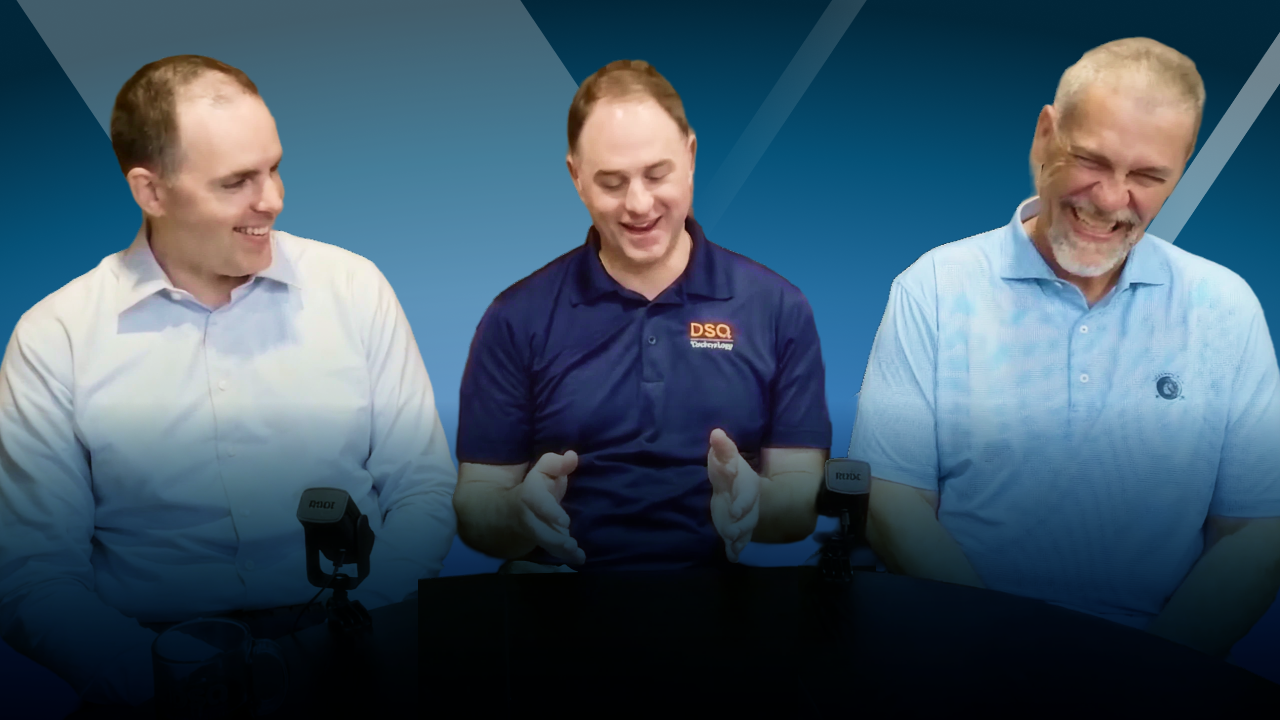
Welcome back, everybody, to the Waste Nexus Podcast. Brian and I are joined by Christian Ruff today. Christian is a former helicopter pilot in the 160th, and happy to talk to him. Last year, if you recall, if you were a Waste Nexus attendee in person, gave an incredible speech as our keynote speaker. And today is running Uncommon Elite, which I'm sure he can tell you about better than I will, but bringing together the best for businesses across the country. And I want to welcome him today and thank him for taking the time out of this to talk to two goons who not only dress the same but can put on glasses and look the same too.
So yeah, welcome Christian. Thanks.
Christian Ruf
Glad to be here. Thanks for having me.
Brian Dolan
Christian, would you say that the 160th was more or less prestigious than being the initial keynote speaker at Waste Nexus? Where would you rank those two?
Christian Ruf
Ooh, that's a great question. I would say probably being the keynote speaker is a little bit up, is higher up there.
Charlie Dolan
On a first-time event, you know
Christian Ruf
There's a lot of trust involved with that. So, you know.
Brian Dolan
Well, you did characteristically say yes without actually knowing what I was asking for. So, it was “Would you...” and you were like, “yes. I was like, “Can I finish?”
Charlie Dolan
So, here's what I have in my notes, and then Christian, I want you to fill in the blanks. it's called the 160th SOAR, do you say it? SOAR? Okay.
Christian Ruf
Yeah, SOAR.
Charlie Dolan
and the nickname's the Night Stalkers. Is that also accurate?
Christian Ruf
Yeah.
Charlie Dolan
So special operations helicopter pilot, that I know from following you online is an exceptional group, and talking to you over dinner for two hours, trying to learn everything there was to learn about helicopters. I guess just would love to start there and not only know some of the history and your experience in it, but even leading up to it.
Like, what makes you choose to go into that, or do you get placed into that? You know, is that something where, from age six or eight or ten, you knew that that's what you wanted to do? Or is that something that you kind of go, “well I wanna serve, I wanna figure out how to offer myself for the country”, and you kind of maybe go into that over a longer period?
Christian Ruf
There's generally a theme in my life where I have, I think beyond like right after high school. My dad passed away when I was seventeen, when I was a junior in high school. So that kinda left me to figure things out on my own. I had two younger sisters; my mom was more focused around them naturally.
So that kinda put me in this position where for better or worse, I didn't have a lot of guidance, and a lot was left up for me to just figure it out.
Ended up going to University of Vermont, which was my safety school, and we're walking by a freshman orientation, and we're walking down the street and there's this building up on a hill and it's the ROTC building. And I had an aunt and an uncle who were gonna pay for all of my school. They were gonna chip in, pay for everything, and I was gonna be set. And that didn't really feel that good to me.
So I'm walking by the ROTC building, and like, you know what? The military's always been kinda interesting to me. I might as well go try that out. I go inside, there's this guy in there, and he's short, he's a little bit chubby, kinda unassuming, and I start talking to him, he starts explaining the program. Well, turns out he had his PhD in philosophy and was a special forces Green Beret officer. And I was like; I kinda like this guy. And he said, “Hey, do you wanna just try it out for a quarter and see what you think?” And I was like, “ Yeah, that sounds good.” And so I tried it out for a quarter, and I liked it, and then they paid for the rest of my school.
And then it came time to say, okay, what do you want to go do in the Army? And at the time there's twelve different branches: infantry, engineering, aviation. And I'm at this event where you go to all these different tents for each branch, and you meet officers who are serving in that branch, and they pitch you on it. And to be honest, everybody seemed really uptight except for the pilots. They seemed pretty laid back. And so, I said, okay, well maybe I'll try and go do that.
Knew nothing about flying, had never flown in anything other than airliner. And I got in, I got into flight school and was like, okay, cool. Let's see what this is like. And I hated it. Absolutely hated it. Hated flight school, hated everything about it. It's in southern Alabama, in the middle of pecan fields. I didn't like the way that it's very scripted. The instructions: you're following a very scripted agenda every day for two years. Hated it. And it came time to choose your duty station. And I put a couple of different preferences, all of which were basically stateside. And they came back with “Hey, do you want to go to Germany?” And I was like, “That sounds interesting. I might as well go try that”. And did that.
Ended up loving it. Really enjoyed the flying, had some great instructors, and I had a commander who had come from the special operations community, from the 160th. He was the first commander I had, and the way that guy led, set expectations, was tenacious, built morale, and a lot of accountability. I was like, you know what, that guy seems cool. I would like to be like that some more.
And by the end of my time in Germany, I'd done okay as a pilot. I progressed nicely. And I was like, you know, I want to be more like him and around people who are like him. But there's not really a lot of information out there about the 160th. From the standing on the conventional side, nobody really knows what they do. Nobody really knows a whole lot about how you get there. You don't really know a lot about the day-to-day, what it's like being there. And I said, well, cool, I might as well go see if I can do that. And that led me to getting in.
Their assessment process is pretty brutal. It's one of the more challenging things I've had to do. It's very short, but it's very taxing on the mind, but then the training pipeline, which is about twelve months long, that was one of the more enduring challenges that I've had to face.
And then the last kind of opportunity for me to just go see something out is they ask you to rank your preference in aircraft and your preference in location. And there's three aircraft, Chinooks, Little Birds, and Blackhawks. And there's three locations: Seattle, Savannah, and Port Campbell. And I said, I want to fly Chinooks in Seattle. And I put anything that was an attack airframe at the very bottom of the list.
I think I noted that I don't want to fly an attack aircraft, and I want to either be in Seattle or Savannah. And behold, I got probably the most aggressive attack aircraft that exists within the military, and I got Kentucky. So I was just back in another position of like, well, I might as well go might as well go try this.
Brian Dolan
But at every turn you didn't have to ask permission, right? Each of those little steps along the way, you decided for yourself.
Christian Ruf
In a way. Yeah. In a in a in a way. Like, I decided for myself, I wanted to go try out there. but I never in all of those situations, I never really knew what I was getting myself into.
Brian Dolan (08:29)
It fell.
Christian Ruf
Yeah. And then of course, on my way to the 160th for training, I met my now-wife. We started dating. So, she's watching these twelve months as I go through this training, of which both of us have zero idea of what it's actually gonna look like. I was like, you know, they have pretty predictable schedules and they're pretty focused around the family. It's really tight in a community, high culture, so I'll probably deploy at some point, but it's like everything's kinda like scheduled and scripted out. And I think it's gonna be great. And I finished the training, she moves to Nashville, we move into our house. The second week she's there, my commander, who I have not yet met, calls me on a Friday and is like, “Hey, you're leaving on Monday morning”. And where am I going? He's “I can't tell you over the phone”. And I said, Okay, well how long am I going for? And he's like, “We don't really know”
And I go to my girlfriend, now wife, and I was like, “hey, so I'm leaving on Monday. I don't know where I'm going, and I don't know when I'm gonna be back”. And that just started the next four years of living on the edge and just waiting for a phone call to come in to go somewhere. And again, she didn't really know what we were getting into. I didn't really know what we were getting into, but we just kinda figured it out.
Brian Dolan
That's not an easy layup right off the bat, is it?
Christian Ruf
No. No. We got engaged pretty quickly after the first deployment. We got engaged pretty quickly 'cause we're like, okay, this is what this is gonna be like, and I would say...
Brian Dolan
She was still there when you got back, so that's a good sign.
Christian Ruf
That's a good sign. She had a pretty good setup where I would go disappear, and she would come and hang out with her parents in Hilton Head. But I would say that's really been a theme, and that's kind of how it's led me here today.
A friend of mine asked if I could help him find a COO, and I said, “I'm sure I can figure it out”. Ended up finding a guy, and then somebody else asked, and it fell into place.
Brian Dolan
Right. It's interesting. So I came across you on Twitter, right? And I don't I think I told you this at one point. After your keynote last year, I spent three days digging through the internet finding everything you've ever written. And this was before I was ever any good at using AI type stuff. And I put all that into a single document and then curated it in a way that made sense for our company, and I turned that into our hiring process, which is basically your hiring process. I don't know if you've ever done that to write everything you've ever taken and put it into one thing.
Christian Ruf
I've not no.
Brian Dolan
Well, the book will sell, I'll tell you that. Because it's been a positive outcome here to look at attributes over resumes, right? Because when I look back on the successful hires we've had over the years and the unsuccessful ones, when I trusted the resume was when I got burned. When I was able to understand, okay, what makes this person, you know, what motivates them and why, and then teach them the skills after the fact, okay, that results in a better outcome in my experience.
Charlie Dolan
One of our other online friends, who's also from Pittsburgh, Jeremiah, tweeted something yesterday that fits that. He was talking about sales, and he was saying, if you know, if there's sales experience, I'm paraphrasing it, but the point is basically don't worry about that. Look for all the other attributes that are on there, the sales experience might be the least applicable.
Christian Ruf
I mean, he nailed it with that, and this actually, it happened to me today. I'll just say no to people who reach out who want to hire somebody like I need somebody with experiences and experience in this industry, and I have to have it. Now I just say no.
Charlie Dolan
What do you find that, like I can only imagine what the daily routine is like, and then when you're in the 160th, right? And then a portion of that is, you know, a large portion of it, I'm sure, like personal discipline, right? Eating right, sleeping right, staying in shape, all that kind of stuff. And I that I'm assuming is a large bucket of.
Christian Ruf
Not that much. Not really.
Well, let's assume that it's there. But then, you know, Brian and I both like to do some level, even though he has a lot of kids, and my wife and I have a lot of kids too, but still like to do some level of, you know, adventurous sports or whatever. And so, I can only imagine if you were flying, I'm guessing daily for four plus years. That's a very hard gap to replace 'cause I'd I would imagine it's hard to get in a helicopter that is not what you were flying then and get the same sort of, you know, rush or just satisfaction out of it.
So, you know, what's that like? And also, what is that daily routine, and how do you kind of lean back into that in a positive sense? Because I'm sure it's difficult to not be able to go do that, because I'm sure it was very, very fun to fly those.
Christian Ruf
The routine in the 160th is a, well, there really isn't much of a routine. I mean, I'll give an example. I might come in on a Monday at 9 o'clock and do some planning and work with the guys and then Tuesday I come in at noon, I fly till 2 AM, and then I come back in on Wednesday at 6 AM to prep for a meeting, but then I fly again till 3 AM and then Thursday is a normal day and Friday I'm flying all day.
Every day is just kind of a can be a crapshoot. The things that I've taken from how we operate to one of my businesses right now is there every morning at 8 o'clock. There's a daily stand-up where they go through aircraft maintenance, and it's scripted, and somebody's leading it. And each organization, so whether you're the Chinooks or the Blackhawks, they meet at 8 o'clock on the dot, and they run through what aircraft are, where they stand with maintenance, which are flyable, which are kind of set on the side for alert, and what the priorities are for the day. Because really, we did a lot of flying, but you can't fly unless you have a maintained aircraft.
And that happens every day without fail. So now the main effort of the organization, which is maintenance, not necessarily flying, is coming in, and they're orienting around the day. Everybody has their priorities, and then the next day you're tracking, all right, did we do the things that we said we're gonna do? And yes or no? What do we have to make up? And now let's shift the next day.
Same thing deployed. You'd come in; it'd generally be in the afternoon because we flew at nights, and there'd be a daily stand-up. And at that daily stand-up, we would cover what we were targeting and any updates there and what the plan is for the day. And that happened every day without fail. So, there's this underlying consistency of setting expectations, setting priorities, and holding each other accountable to it. That in my trades recruiting business, that's the most effective thing that we do. Every morning at 8:30 without fail.
Brian Dolan
Yeah, the waste industry has that. Every morning they have a safety briefing is what I understand from a lot of companies.
Christian Ruf
Yeah.
Brian Dolan
And every morning they have a send off in some variety.
Christian Ruf
Yep. I think that most companies, at least most companies I've seen, especially in the home services trade space, skip that.
And they don't have this underlying consistency. The other thing that we did is, every week, we just had a training meeting. And if you're familiar with EOS and like, a level 10 meeting, it's a lot like that. Tracking our goals, looking at the scorecard, which was the scorecard for us was proficiency of our pilots. That's basically the currency in which we operate.
Going through action items, walking through issues, and then assigning actions for the next week. That happened without fail. And then every quarter, we would take a look at where we needed to be as far as training and proficiency, and events, and maintenance. And we'd sit down and come up with a plan that was oriented around our yearly goals, and honestly, like 18 months in advance. And that dictated our line of effort for the quarter.
So, you have goal setting, you have tracking KPIs, you have setting a pace, like a daily pace that everybody keeps up with. And so, in the mess that is, Christian gets a phone call on Friday and disappears for 45 days, or, you know, I get a phone call on in walking into a yoga class and get a phone call and, by you know, within eighteen hours, I'm in Iraq; the team still operates despite the chaos.
That is what I have seen to be the most effective in some of the businesses that I've operated in when I got out, and what I'm doing today.
Brian Dolan
The interesting element of that, because I've heard you talk about this before. When you have a multi-time zone, geographically diverse team, I converted that eight AM stand-up into an 8 AM email. So, I send an automated email to the people who are on my team, and I ask them every day, what are you up to today? The very simple thing does just say what are you up to today? Because some days you don't have touchpoints with everybody, right? They're working on their thing, you're working on your thing. You may not actually speak to them. But if I have that 8 a.m., reply from them, and it can be three lines, “Hey, I'm working on this, this, and this”. I then have a touchpoint of what they're doing. I can course-correct if I need to say, “Hey, that's I don't want you working on it. It's not important, right? Push that to next week”. Or I can dig in and say, “I'd like to be involved in that”, or “I'd like to hear how that's going, update me”. And it is funny, it annoys some people, and I tell them early on like this will annoy you at some point. This will become monotonous and tedious. But it's necessary for you and I to stay in contact on a daily basis of just take one minute. What are you up to? Right? So, there are ways to do that that aren't always in person.
Christian Ruf
For me, I think it's yeah, it helps with the prioritization, helps with the expectations and the do outs. For me more than anything, it's setting a pace.
Brian Dolan
In terms of “did you get it done?”
Charlie Dolan
I feel like you're kind of hardwired for that. From my observation of talking a couple times through these things where when you and I think a lot of your talent, that you're helping work with these companies, when you're used to, I think you described it again, sort of paraphrasing, you're able to pick a point, geospatial point, and within like plus or minus a second, you can commit to being there.
And that was like mind blowing to me. But you're like, yeah, I mean that's just kind of the expectation. We're gonna be at this place, at this second, or at this couple seconds. And that's how we coordinate when we're out flying. And I feel like that probably just really rewires your brain.
Christian Ruf
Yeah.
Charlie Dolan
For everything, right? Who's on your team? What's the commitment level of your team members? What's the coordination capability of the organization and the people that, you know, are “in the trenches” with. We joke that we see dumpsters when we walk around and look at the back of a building and stuff like that. You know, your brain's probably much more attuned to seeing high performers, seeing, you know, teams that can coordinate and that kind of stuff. And that's just a very cool thought to be able to have really hardwired that into your head.
Christian Ruf
Maybe to a detriment sometimes. I really can't stand being late to things. But yeah, as a baseline, yes. Yeah, very good.
Brian Dolan
You were early for this podcast.
Christian Ruf
I was early.
Brian Dolan
But now your biggest fear is what? Missing up dinner for Thanksgiving with the extended family, right?
Christian Ruf
Yeah. Being late for the barbecue. Yes. I think that's probably the one thing I don't set expectations for 'cause I don't know, haven't nailed that yet. But yeah, I mean, we would set plus or minus thirty seconds anywhere in the world. We would set that expectation, not necessarily for ourselves, but for who we were working with.
And if we had to deviate—because there are definitely times when we had to deviate where you have a plan and then you take off and the plan doesn't exist anymore, and now, you're gonna be forty-five minutes behind, you could still make a plus or minus thirty seconds if you communicate that, “Hey, we're shifting forty-five minutes”.
Brian Dolan
So, in your world, going from an analogue, essentially analog experience, I imagine the beginning of the military, to where you are now, AI is everything; everybody's all focused on it. One of the talks we're gonna give at our Waste Nexus event, what do you see from where you sit today, in terms of how people are keeping that mentality of excellence, attributes, on time, then, yet they're introducing this thing of, I now have this machine that can do a lot of this for me. Like, how does that work from what you're seeing in these? 'Cause you're working with HVAC companies, you're working with all types of different varieties of companies.
Christian Ruf
I mean AI doesn't remove the need for good leaders. I may be totally wrong.
Brian Dolan
I love the brevity of your answers. It's so good.
Christian Ruf
I may be 'cause I've thought about this. I thought about what effect is AI gonna have on my business? I think it's gonna help me, I think it can help me find guys faster, build up my network, but I don't believe, and I would welcome to be wrong on this. I don't believe that any AI tool is going to be able to find candidates and know, “hey, this is going to be a better fit”.
Sure, you may be able to find, it may help you find military people easily for the job, but it doesn't take away that we still gotta know if they have the attributes to do it.
Brian Dolan
Yeah. I look at it as a force multiplier in both positive and negative. Right? If you're good at something, it helps make you better. If you're mediocre at it, it's gonna expose that you're mediocre, and the results are gonna be even worse because you're gonna go faster towards the ground.
Christian Ruf
The reality is some of the people that I come across with their backgrounds, they may be better as an individual contributor than as a leader, and now is the position that they had in the military, and they were really, really good at it.
Brian Dolan
Yeah.
Christian Ruf
Or, and I see this a lot, and it's surprising to me, some of these guys that I'm looking at are way more hardwired for sales than they are operations. And they may have been a Navy SEAL or a Green Beret, and that be you know, be in these organizations that just scream highly effective leaders. Yeah, but they're better at sales.
Brian Dolan
That comes out on the attribute side when you're doing the assessment.
The assessment thing is pretty fascinating. Most people have a hard time, they understand attributes versus resume. They have a hard time converting that concept into assessments.
Christian Ruf
So, what have you guys done?
Brian Dolan
We wrote a bible of assessments that you can use. That you can draw from.
Christian Ruf
What are the assessments? Like tactically? What are you doing?
Brian Dolan
A bunch of them are just situational, conversational type things. One of the ones that you know you've used, and I've stolen, is the one at the counter with the guy with the coffee and he steals the bar, right? That's an easy one. But that one works, right? It exposes some very basic “Okay, how do you approach a conflict situation, and what are your ethics?” Right?
I mean, most of what the business world struggles with is communicating in conflict situations and ethics. Like, half of my college courses were business ethics
Christian Ruf
That's how I do it. I mean situational. What I advise is fabricate the reality of the role and test the individual inside of it. And so, on my assessment for the 160th I did that for I guess like five days or something. But at the very end, I was given a case study.
I was given this mission that I had to go plan. And there were components of that mission that I had never even thought about doing: taking off from a boat, flying over water, aerial refueling, landing on a mountaintop that is outside of the environmental landing on...
Brian Dolan
Landing on a building in Pittsburgh at night.
Christian Ruf
Yeah, landing on a building in Pittsburgh. And I was given this, like, “Hey, here's the mission you have to go plan it”. And I don't know how to do any of this stuff. But the reality was that I was going to have to go and plan and execute some of those things in a couple of years.
And so, I had - I think it was like - ten hours to come up with a plan, and I had five minutes plus or minus three seconds, to brief what I gonna do. And looking back at the answer that I gave is just laughable because it's so far off what you actually would do or have to do. But the point wasn't what answer do I come up with? The point was: how do I arrive at that answer?
Brian Dolan
That to me, that's part of it, but there is sometimes, like we did an assessment of a technical role in the past year inside our company. And one of the candidates that was put forth, he hiring manager was all, “he's a good person”. So, okay, what was your assessment? What do you mean, assessment? I said, Well, remember we have to assess these people, especially if they're in a technical role, like can they do the actual technical piece? So, did you put them in a situation where they could do the technical piece?” And so, this person ginned up an assessment, sent it to the person, said, here, get this back to me tomorrow. And it came back poor. Right? And that weeded that person out. And otherwise, we would have hired that person, sat with them for 90 days, and then realized, this is a bad person. And then, as a result, the person we got instead has killed it. Absolutely been amazing.
Christian Ruf
I think it's really important to know when experience matters and when it doesn't. Because, in reality, in some rules it does. I have a client who has a large real estate tax and accounting firm. And they weren't doing technical assessments for the tax people they were bringing in. Like, well, tax stuff, like you've got to know, you gotta know the rules, and the regulations and what to do.
Brian Dolan
Mostly black and white.
Christian Ruf
Yeah, mostly black and white. And unless you have a way to train the technical part, then yeah, you certainly have to look at it. We had the benefit of, we had a 12-month period in which we had over a 90% success rate of training the technical piece. So we could filter out for the attributes in the beginning and then have the confidence on the backside and the time and resources to say, we're going to train you how to do all this stuff.
And then know at the end of it that they're going to produce someone who in two weeks can go deploy and be somewhat self-sufficient inside of an aircraft. Most businesses don't have that though. They don't have 12 months to train someone, right?
Like, 12 months is a long time. So there certainly is a time when your experience counts. But I would say predominantly, most over index on it.
Charlie Dolan
One interesting, I'd say, alignment for some of the roles that we have are actually people who have played PC video games before, which is kind of ironic. But it's actually maybe becoming a little bit more applicable with being able to delegate things to a bunch of AI things, waiting five minutes, and then seeing the output of them.
And that one just makes me laugh because like I think in the past it would have been more of like a, you know, okay, this job requires writing a lot of emails. How fast can you type, and can you write well? And I think there's a place for that type, I guess you could call an attribute, but it's more of just like, I don't know, professional competency kind of thing.
Christian Ruf
Yeah. I would like to think that my twelve years of having to practice cello for three hours a day had a lot of relevance for flying helicopters.
Charlie Dolan
But I just say, you know; I think we're seeing a shift in some of the things that certain people's background and skills give them an edge in some ways. And in that, a lot of the administrative things are maybe a little bit less prioritized. But also, being able to maybe juggle two or three things in the past was kind of, try not to do that, focus on the one task, and now it I don't know— it's kind of just the nature of the work.
And that's something that we're trying to balance with how we do these assessments depending upon the role. So, you know, it's interesting to see the shift.
Christian Ruf
The important thing is that you're doing it.
Brian Dolan
Yeah, they can be imperfect, but
Charlie Dolan
They're certainly imperfect.
Christian Ruf
My understanding of this... I never really got into the assessment process. We would have guys come and assess, and I would be there and watch how they're doing, but it wasn't really my thing to do. It was usually one of the instructor pilots that was doing it. But there's a whole assessment division within the 160th that has a dedicated team; that's all they do.
And after every assessment process, they sit down and debrief it and say what went well, what didn't go well, what do we need to do differently to make it better? So, they're constantly iterating on getting better and better and better. And companies that do that, like, yeah, it's always gonna be imperfect, but if you're looking at it and you're critiquing it and saying, What could we do better? Your predictability of finding the right people up front will continue to increase.
Brian Dolan
Yeah, that's probably something we need to be better at is actually going back and self-critiquing after the fact. But I get the feeling that no matter how much you do that, you'll always say like, “we could be better at that”.
Christian Ruf
Yeah, I mean we had that happen. Like we would have guys would certainly get through and then get to the organization and be flying and then you realize they're not a good fit.
When I was there, we had three guys. Three guys that had gone through the process, two of which had been there for probably two years or so before they departed, and one guy who'd been there for over a decade, and something got missed.
Brian Dolan
Hmm. Yikes. That's a long time.
Well, I said before our thing started, I had a tweet that you'd done at one point that I was gonna bring up. So “it's the pilot of this helicopter is in his twenties and wearing a Timex”. And it's the guy flying up all along the ship. And I chuckled at it because it's very much on brand for you, right?
It's very brief. Very much to the point. And it's very much just amusing in its use, the Timex thing, I think, is what drove it. That's my two cents, right? But you know, part of what we're gonna talk about at our event this year is, I've got Spencer Scott coming, and he and I are gonna give a talk on branding and social media and all this. And it is an art form in some ways and a science to be able to take something like that and produce it, right?
Which is here's a video of a helicopter flying by and landing or not landing, whatever it's doing. And some people present that as a technical description. “Here's a chinook, da da da”, and most people's eyes glaze over. Like, I don't know what the hell that means. Great, it's a helicopter flying by. To turn it into something that people actually click on, engage with, and then share and get some emotion out of in some capacity, whether it's humor or whatever. Is a skill set, right? And I get the sense that in part, it's just your personality that's driven that. It's not that you like studied it and learned it. It's just who you are.
Christian Ruf
I think it was some kid that posted “Buy a Rolex; go into debt if you have to”. Like if you're in your twenties, buy a Rolex, go into debt if you have to. And that took off. And I was just thinking, well I was in my twenties, I was doing that with a shitty Timex because you didn't want to have a digital watch next to the radar on a ship. Admittedly, in that video I was in the right seat, holding on for dear life, and the guy, the actual pilot in command, who's still there today and has done some well, some outrageous things very successfully. He was the one who actually flew, and I was just, I think it was my first time doing that, and I was just like, wait, this ship's very, very close.
Brian Dolan
Yeah, and bobbing.
Christian Ruf
Yeah, yeah.
Brian Dolan
Right. But you know, part of your business is being online as a presence, as a personality. Right? You do the podcast with Matzner from time to time. You've been on here now and then, like what else are you doing as part of that routine?
Christian Ruf
It's really, it just comes down to posting on X and LinkedIn, and talking about the roles that I'm hiring for, and talking about the guys that I'm talking to, and just trying to have some fun with it.
Brian Dolan
Have you started writing the book yet?
Christian Ruf
No. No. It's not a bad idea, and I've certainly thought about it.
But really, like my best marketing is just being consistent on social media, and I have been surprised the number of referrals that I've gotten from people who follow me and refer me to their friends. They don't have a hiring need, but their buddy does.
Brian Dolan
Yeah. Well that's I mean, you generate a trustworthy atmosphere of, you know, personality around you, right? You have results to prove, and it's a very clearly understandable product, very narrowly niched, right? I think a book is in your future simply because, one: you've never taken all your stuff and collected it into one thing. And two: I think, as a credibility part, I think it's a massive boost in credibility, of like “he has a book”.
Like people perceive that as a major credibility thing. So, it's a post.
Christian Ruf
Yeah, it's I have thought about I have thought about it. It's been on the back of my mind. I already have the title.
Brian Dolan
“It's rough out there”.
Christian Ruf
That's actually a good one too. No, yeah, that...
Brian Dolan
Don't give the title here. We'll wait until it comes out.
Christian Ruf
I won't give it away. There's probably a word in there that I probably shouldn't say in a recording but it will be the title of the book. I'd have to give more thought into what the content would be, and I think there are people who are better at what I do. So there's a guy who's active on X, Dan Parker, he was a flight lead, Chinook flight lead for the 160th, which is the very tippy top of skill set and leadership in that organization.
I think he's better at planning and assessing people than I am. So, the thought that I've had is if I was gonna do something like this, I would bring in the real experts to help do it.
Brian Dolan
Yeah, there's books like that where you know, you have three chapters and somebody else has three chapters and there's chapters from different people. One way to do it.
Charlie Dolan
Well, in any event, keep the social media posts up 'cause I know we joked about it earlier of you doing a training exercise here in Pittsburgh, and there are a bunch of training exercises. I think they like to fly the rivers here but it's funny just seeing how different people think. I think it activates some sort of latent space.
So, I'm driving home the other day, and if I wasn't driving I would have taken a picture of it. There were three helicopters flying and they did not look anywhere near as tight in formation as maybe some of the stuff that you post. And I thought about taking a picture of it and send it to you and say, “What do you think of this?” Are they doing good or do they need to tighten up?
And I don't know, it's just you look at the world a different way when you know you get some commentary like that, and it's interesting. I know. There's a bunch of ones flying around from the Blue Angel flyovers and stuff like that, which was going on this summer. You know just interesting to see everybody's perspective on that. And you know, I think that keeps you front of mind of people for those referrals and stuff like that, as I see helicopters, I think of you guys.
Brian Dolan
Well, so if you're in the waste industry and you're give your pitch. My mine would be if you're in the waste industry and you want leaders, call Christian. But what would yours be?
Christian Ruf
I mean that's pretty good. The one hire that solves all your leadership problems.
Brian Dolan
All right, that's good. That's good. I like that. Well, so Chuck, do want to wrap up on anything else or do you wanna take us home?
Charlie Dolan
What's your favorite assuming the weather's good, assuming I don't know, you don't have to carry anything or whatever, what kind of car are you driving and where?
Christian Ruf
Man, I've bought a lot of cars in the last six years, and this is the longest I've gone without buying, and selling a car. It's a 1999 Toyota Land Cruiser with 230,000 miles on it. And every day I go on to Auto Trader and Car Gurus and look at 2022 F-250 King Ranches as if I'm gonna buy one, and I just keep coming back to, like why would I drive anything other than a 1999 Toyota Land Cruiser?
Charlie Dolan
You gotta hit up bring a trailer and cars and bids, and get a little sporty stick shift in there.
Christian Ruf
I do. I bid on a car, I bid on a soft top FJ40 on Sunday and it was definitely like a project. Like I don't even think there was a soft top to it. The guy just drives it around to buy milk and stuff. And I bid on it, and then I was like, shit, I hope I don't win. I hope somebody else bids on it. And I was like, it took a day, and then somebody outbid me by two hundred dollars and I was like, thank God.
Brian Dolan
Well we should keep with tradition and do a little lightning round, which I did not prepare, but I will make one up right now. So, you ready? These are quick answers. You ready?
Christian Ruf
Okay. Okay.
Brian Dolan
So, who wears it better? Charlie or me?
Christian Ruf
Brian.
Charlie Dolan
As I make my stubby neck.
Christian Ruf
You
Brian Dolan
Is the Pope Catholic?
Christian Ruf
Yes.
Brian Dolan
Where did he go to college?
Christian Ruf
I don't know.
Brian Dolan
Villanova.
Brian Dolan
Would you rather cook and smoke meat for a day or sit in a helicopter for a full day? 24 hours.
Christian Ruf
Is the helicopter flying?
Charlie Dolan
You're flying the helicopter.
Christian Ruf
Barbecue, yeah.
Brian Dolan
If you had to sell the Toyota FJ, not the FJ, the Land Cruiser, and you had to choose between a G-Wagon or a Cayenne?
Christian Ruf
Is neither an option?
Brian Dolan
You can walk, yeah, you can walk.
Christian Ruf
I would take an old G Wagon. How about that?
Brian Dolan
Well see there's the yeah, that's the trick, an old G-Wagon, right.
They did have the original Cayenne's came in a stick, and were really good off-road.
Christian Ruf
Okay. All right. Didn't they have a diesel one, didn't they? A turbo diesel?
Brian Dolan
They had a turbo diesel. Yeah. Volkswagen had a turbo diesel in their Touareg thing too.
Charlie Dolan
Yeah, same footprint as the Touareg, right? Yeah.
Brian Dolan
Yeah. Okay, that was fun. We'll do that. That's good.
Christian Ruf
Yeah, that's good. That's good.
Charlie Dolan
Alright, nice. Thanks everybody for listening to the Waste Nexus podcast today, and thanks for Christian for spending some hours listening to us banter back and forth and fanboy over over helicopters and cars. Stay subscribed, and listen up for some more content coming out around Waste Nexus, which is this September in Pittsburgh PA. We will have some more content coming out ahead of and following that, both of some of the sessions that we have there and some of the interviews of different attendees during that.
And yeah, looking forward to staying in touch. And Christian, thanks again.
Christian Ruf
You bet. Thanks guys.
Charlie Dolan
See ya.
Brian Dolan
See you next time.