The Money Behind the Trash: M&A, Multiples, and What Your Waste Company Is Really Worth
July 6, 2026

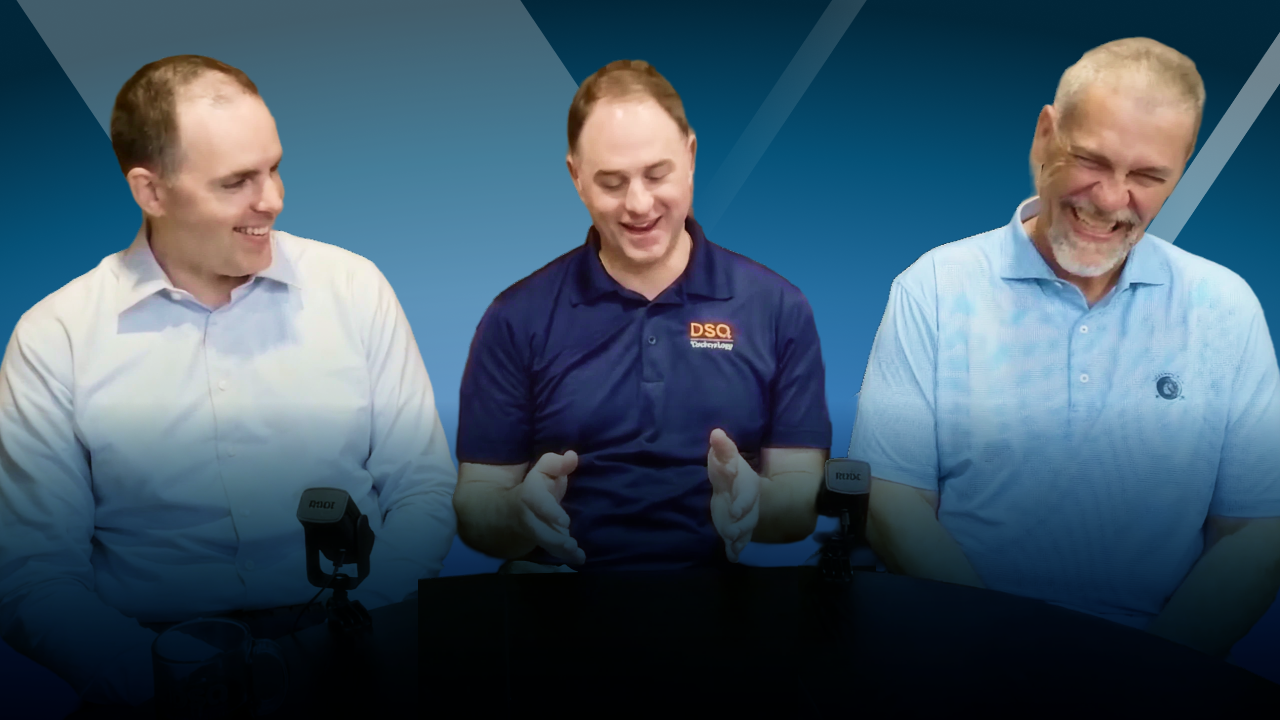
In this 8th episode of Waste Nexus, Brian and Charlie welcome back Matt Hillin, M&A advisor at Lakeside Acquisitions, for a numbers-first look at the money flowing through the waste industry.
Matt tries on being a macroeconomist and regulation expert. How'd he do?
Ai says "the conversation lands on why waste behaves so differently from frothy sectors like AI and SaaS: disposal scarcity, the private-equity roll-up playbook, GFL's land-and-expand strategy, and the real drivers behind upper-single-digit EBITDA multiples." Did it understand or hallucinate?
Matt also gets candid, given his experience, on when homegrown software actually hurts your valuation, and what a buyer really wants to see before they'll pay top dollar.
Plus: why the smartest move for some owners is to build, sell, wait out the non-compete, and do it all over again.
Charlie Dolan 0:00 Welcome to another episode of the Waste Nexus podcast, joined today by Matt Hillin. He has been a long-term uh friend of Brian and I's uh a lot of investment and you know, financial background experience in the industry, um, and happy to have a conversation today. Uh just talking about industry in general. Brian, do you want to kick us off with some some questions and discussion points? You want me to hop into some of the ideas I had?
Brian Dolan 1:00 Well, I think the uh first thing to highlight is thanks, Matt, for coming back. You uh are a second-time victim of being around us. Amazingly, you're willing to do it twice, which I appreciate. And uh Matt and I also met up at the Waste Expo in Vegas a couple years ago. Um if you recognize his voice, he was in the background on one of my videos from that.
Matt Hillin 1:26 I didn't even know I was recorded.
Charlie Dolan 1:27 This is during your costume phase, Brian.
Brian Dolan 1:30 Yeah. But yeah, Chuck, launch into what you want. If you've got topics, let's do it.
Charlie Dolan 1:34 I've got some uh I've got some topics. So, Matt, I've been just paying attention to on one hand, all this like massive run-up and valuation that you see on like AI companies, all that kind of stuff, and just like how hyperbolic that is. And then really how consistent the waste industry is in its own little unique way of we have these, you know, large established players, they're after route density, hard asset kind of stuff. Um, and the one thing that stood out to me looking through just you know, we had a we had a wave of third-party companies called, you know, many call them brokers doing big fundraising rounds and that kind of stuff. And that had some venture side to it. We've had some venture side to the software portion. That seems to have really kind of phased out now. You have some private equity interest, I think, in those. Um, and just a really unique landscape in this market. I'm curious on what you know you're seeing uh change or be the same there. Um, because what what I've noticed is it has a much different, like this industry has a much different output for a small or medium-sized company trying to go through quick scale because the established players with the most capital don't necessarily actually buy them. There's very rarely an acquisition by, you know, one of those big four or five haulers of a technology platform. They'll usually buy something and start to use it. I think a good example of that might be like, I think it was 2017 or 18 with the recycling stuff. Waste management deployed a lot of compology sensors at the time, but that wasn't quite the right shape for them. They ended up putting the cameras on the trucks and using that, right? Um, and so it's it's pretty unique, I think, where on one hand, the market is very frothy on we need more technology, we need more startups to solve these problems. But the waste industry is like a little bit differently aligned to to accommodate that. Um, and yeah, just curious what what you're seeing either change in that regard or or remain the same.
Matt Hillin 3:26 Yeah, well, I think you're right. I mean, the investor base in the private side of the industry, and and probably somewhat in the public side, although, you know, I'm less sort of in tune with maybe some of the specifics around that. Uh, but the investor base in the private side has definitely shifted, right? Um, you know, you mentioned waste brokerage as one example here, um, which you know maybe some of the industry would like to call managed service providers to be a little bit more, you know, sophisticated sounding and and whatnot, but whichever one you want to call it. Uh let's say, you know, a decade ago, something like that, it was a pretty much less mature side of the industry, right? And you did see some money starting to flow into it. But this is also the era of you know, zero percent interest rates, and money was flowing all over the place and trying to find those pockets where you know, for all the VC firms out there, that one in 10 or one in 50 or even one in a hundred kind of unicorn would would sprout, right? And it was very cheap, relatively speaking, from the cost of that capital for them to do that. And uh, you know, there's probably some moderate success here and there, but I think largely um reality set in that, you know, unlike a pure software play, when you're managing customers' waste services, even if you're not running trucks on the road or operating a transfer station or landfill or uh MERF or any other sort of physical assets, but even if you're just you know managing uh services as a broker and making sure that customers' trash is picked up every day, you're dealing with service interruptions and weather disruptions and all this stuff all over the country. That's not an easily sort of Silicon Valley style scalable platform in a lot of ways, right? At least for their traditional thesis. So um, I think we've seen some retreat from that sort of hockey stick assumption on that growth profile, but it doesn't mean that the money is completely vanished. Uh certainly other areas of the private capital space have stepped in. And uh notably, you mentioned already on private equity is becoming more and more of a player in the space. I think that's true on both the hard asset side and the asset light side of the industry. And um, I think in some ways it's good, you know, um, it brings a little bit more sophistication to the industry. You could make an argument that your mom and pops across the country are being competed out uh of their of their little local markets here and there, but I think that's maybe not the right way to think about it. I think the way you should think about it is it's an opportunity for the mom and pops to step up their game and maybe become better and maybe position themselves to be bought by one of the private equity consolidators, um, or just continue independent, but just get better at what you do, you know. Um, you can't, you know, no industry out there can just keep doing the same thing for decades and not expect change.
Charlie Dolan 6:35 Yeah. I feel like I agree with a lot of that. I feel like the pattern will probably stay the same, though, of those smaller providers getting their own density and then you know being available for for roll up or acquisition for the bigger players to make route density plays with.
Brian Dolan 6:50 There's also an element that the the vendors that are the smaller mom and pop style vendor, the the big waste company sort of needs them to sell and then go back around the horn and come back out again as a new company because that's a lot of the pipeline that the big companies buy. They're not great at organic growth.
Matt Hillin 7:15 I think you're right, Brian. I mean, we see it all the time, right? We see it all the time. The the really true serial entrepreneur in the industry starts up a hauling company in, I don't know, middle of nowhere, Iowa, builds it for five or seven years, sells it. Maybe they move a couple hours south, you know, to get out of their non-compete zone for five years or or wait, wait out the non-compete sometimes. But uh, we all know it that the big guys, the big four or five are uh and then and then some of the smaller, you know, emerging ones and private equity backed ones, I mean, they're they're MA machines these days, and they have been for quite a long time, frankly.
Charlie Dolan 7:50 Yeah, okay. One thing I think is interesting in terms of just comparing this to other industries. Uh, today, Ramp, which if you're not familiar with that, does uh bunch of like credit card and financial tools and stuff like that for your company. Uh, expense management might be the old term for it, but they do so much more than that. And they're a really good technology company in terms of what they can ship and and the speed at which they can do things. They like more or less announced that they were going to do an accounting uh platform today, uh, in addition to the spend management portion that they do. And I think that's just interesting to juxtapose with the waste industry. That's a somewhat newer entrant. They might be five or 10 years old at this point, um, innovating their way up to now, you know, likely compete more directly with the established intuits and net suites and stuff like that. So that's an accounting industry vertical. But you compare that to the waste side, I think it's really hard for a small or medium player to have that kind of innovative push, either as the supplier, traditional hauler, or as a technology services provider. Um, and it seems like a lot of that innovation kind of comes, you know, in a in early phase one to the waste hauling, uh, big four, five, and then is Ruby built inside that big four or five uh for their first party need.
Matt Hillin 9:02 I think you have to look at it from a customer's perspective too, frankly, not just the investor's perspective here, because let's say, you know, DSQ, your your waste service at your office. Well, I guess it might be managed by your property manager, but let's assume that you manage it yourself, right? Or you you decide your yourself.
Charlie Dolan 9:19 Brian and I have a pickup truck. We love to feel like we're playing role-playing garbage.
Brian Dolan 9:20 I'm out.
Matt Hillin 9:23 There you but you know, if if you're with your one of your local haulers for many, many years and they provide reliable service here and there, and okay, maybe every once in a while you have a slightly overfull bin that you've put out, but you know, on average, you know, you're you're fairly uh you know putting out your bin uh with you know whatever kind of capacity and you're being fairly charged, and then one of the other bigs comes in and uh having acquired them and taking over your account, and then they start surcharging you, you know, all the time with these automated um, you know, overage charges. And and frankly, a lot of false positives are in the mix on those on that technology, and that's a bad customer experience right there. Technology is great, and you can improve service, reliability, uh, you know, certain things around tracking and you know, automated notifications if your truck's gonna be late that day or not coming that day for a breakdown or something, um, which is all improving the customer experience. But that's an example you laid out where it's kind of quite the opposite, in my opinion.
Charlie Dolan 10:22 Right.
Brian Dolan 10:22 Interesting. The the customer experience is highly dependent upon what the customer's seeking, in my experience. Like the the customer who needs those kind of sophisticated tools for reporting for large networks of properties, they're gonna go with a bigger provider because they have a more comprehensive uh software and service solution, right? Whereas when you go with a independent smaller group, you might not have the same tooling to support that large network of properties. But that's the interesting part as well, when you start to then say, okay, how does the managed service brokerage model fit in? Well, sometimes they overlay that delivery of that service of technology and you know consolidation on top of that independent network profile. So it's to me, it's sort of like squeezing jello, right? Every time you push on this thing, it pops out a different direction. And everybody loves to have you know their different little thing that they pick on. But I having been watching this now for 15 years, it hasn't really changed overall to me. Right? It's still the same. Well, there's benefits here, there's trade-offs there. Which one are you picking?
Matt Hillin 11:39 Right.
Charlie Dolan 11:40 What makes me laugh about what you're saying, Matt, is in in many ways the feature for the smaller provider is the fact that it's still like okay, one or two line items on your bill, pretty consistent monthly charge. All right, keeping it simple is the differentiator on that side. Um, which I mean, obviously I agree with for some of my backstory and Brian's with helping people achieve that. But um my fascination with the the photos and stuff like that is simply how good some of these companies are at introducing new revenue streams and margin expansion, which ultimately I think is is good for the whole ecosystem because it's a it's a rising tide type of thing.
Brian Dolan 12:16 But well, it is it that's also a challenge though of how do you you have to look at it from a regulatory and a human uh uh behavior management side. Because if you're the big regulatory focused company and you're getting told you have to do these criteria, you have to meet these things, you have to provide this service. Well, that service is not as profitable as the regulator might think it is. So then how do you change human behavior? Humans don't generally change their behavior unless at the point end of a pointed stick, basically, is what it comes to, or at the end of a dollar, right? And so uh it's that's why I call it like squeezing jello, because no matter which company you are in the in the matrix here, you're ending up on some end of a regulatory consumer behavior uh process that you have to say, okay, how how do I make this work so that we're profitable? Because ultimately these things are these companies are designed to generate a profit for the shareholders and the owner, right? It's a different, it's a little bit uh uh distant from the shareholder to the profit element, right? Because it's a piece of stock you own in a multi uh stock portfolio. But when you're the owner of the company, yeah, right, you see it.
Matt Hillin 13:32 Right. Right. I think I think that's absolutely right. And I mean we've seen plenty of states implement EPR programs and other sorts similar schemes. Um, some better than others. I'm not anti-EPR necessarily, but I think there's a lot of problematic ones out there.
Brian Dolan 13:47 Toronto, is it Toronto that's doing one right now? Gerald Grant was just here telling me about it. They're they're having trouble with theirs, right?
Matt Hillin 13:54 Right. And we're early stages in Colorado. Um, I have a client uh in Colorado right now who's going through that process, and I think he's navigating it well, frankly, as a small business owner, right? But in general, the big guys are gonna be better positioned to compete in that environment. And there's a trade-off, right? Um, the larger you get, the more sophisticated you get, the the the the more, frankly, lobbyists you can hire to sit in DC and the different state capitals around the country.
Brian Dolan 14:23 And understand it's coming down the pipe, right? So you can plan.
Matt Hillin 14:26 And not only that, you're gonna be able to massage the regulations in your favor during their creation.
Brian Dolan 14:32 That never happens. You made that up.
Matt Hillin 14:34 It never happens, right? It never happens, absolutely. Um, you know, commercial waste zoning in New York City, another another interesting example. Um some great things you can say about it, and some problematic things you can say about it in terms of the implementation and some other uh issues. But you know, the the goal was, I think, um, largely admirable, get you know, put fewer trucks on the road, make it safer, more efficient as an industry. Um regulation has a place, and it's all about um making sure it's well implemented and um hopefully having politicians and and regulators that um are open to hearing feedback and not just from the commercial side of the industry, but also from the you know from the constituents and and other you know states.
Brian Dolan 15:22 In New York they put bins on the street finally.
Matt Hillin 15:25 I know it sounded like a wildly new technology and innovation that they announced. Uh I think Mayor Adams, a four mayor, had some big press conference about it a year or two ago, a couple years ago. Pretty funny. Um I guess they're with the rest of the world here.
Brian Dolan 15:40 Yeah, yeah, let's not let's not have the trash just laying on the ground. Okay. Good start.
Matt Hillin 15:44 Yep
Charlie Dolan 15:45 Matt, any take on how long the waste industry is gonna be able to continue to continue to see a pretty steady, I would describe it, increase in like core price. Um you know, whether you measure it quarter over quarter, year over year. I feel like that's been a growing uh compounding effect for them from you know, and obviously being core price net of uh sorry without you know energy or fuel fees. When Brian and I started on this, I think that number was closer to three percent. Today it's rushing up against seven on you know open market commercial accounts. Um when you blend it, I think it goes down to six.
Brian Dolan 16:26 But in today's environment, fuel's bumping up against 50%.
Charlie Dolan 16:30 Well, yeah, but this is the core price, right? That then fuels applied on top of.
Brian Dolan 16:33 Right. It's an it's another line item in the the waste hauler budget and another line item on the bill type of mentality. Those two things dramatically changed.
Charlie Dolan 16:41 And I guess just to give you my take on that, Matt, uh, because uh it's a it's a surprise question, but um I feel like that core price kind of lags other spend categories. I think there's a pretty famous chart of like, you know, stuff that has gone down in price and stuff that has gone up in price over the last 30 years. And it's like TVs and you know other things have really gone down relative to stuff like healthcare and you know other items have gone, you know, dramatically up. And I feel like waste does a really good job of just threading that needle of you know six, seven, eight percent core price increases, uh, net of rollbacks. And they continue to just kind of bump that up 15, 20 basis points every year consistently. Um, but you know, just curious on what you think the outlook there would be or or things that would impact it.
Matt Hillin 17:26 Well, I I mean, I'm maybe first to admit here, I'm certainly no macroeconomist. Um, and I've already played, you know, regulation expert, which I'm not neither that as well. But I I think, you know, it really comes down to the scarcity of the assets, right? Well, it's two, I would say it's two big drivers, at least on the uh, you know, on the industry side of it, ignoring the regulation side, although it's sort of tied into regulations, but it's it's really scarcity of the assets and consolidation here, right? So on the scarcity of the assets, you can look at certain parts of the country, New England, um, to some extent, California, um, probably some other states as well, um, where sort of a combination of regulation and just land availability has reduced the availability of disposal, right? And so you're gonna naturally see it's a simple supply-demand equation there, right? You're gonna naturally see prices uh for disposal uh go up significantly, and then that's gonna trickle down throughout the entire value chain of the industry, right? And there's look, I'm not gonna say I know the solution to this, but you know, it definitely involves the the regulators and it involves also, I think, you know, technology and other innovative ways to maybe reduce the amount of being landfilled and going to maybe more beneficial reuse kind of uh outlets, or and you know, or in some cases being literally packed onto a train and shipped to the you know southeast US or or wherever, right? But um, and then on consolidation side, I mean, obviously, the fewer competitors you have in the market, again, supply-demand here, the higher air pricing is gonna get. I mean, we just we talked about consolidation earlier here. Uh, that trend continues, although you certainly do see more and more um anti-competitive sort of pressure from the DOJ uh or or FTC in that's you know in this space. Um, and that's gonna be somewhat administration dependent, I suppose, but you know, there's a limit, right? And there's a limit to how consolidated the industry can get it. And I wonder, I don't know the answer to this, it's just an open question. I wonder, you know, at what percentage of that 100% limit we've kind of reached at this point. Is it yeah, six percent, eighty percent, ninety-five percent? I'm not really sure.
Charlie Dolan 19:41 So if I'm a if if I'm a lower middle market company looking at how I'm gonna like, you know, plan my my next five to ten years, where do you think that sweet spot is in in terms of like enterprise value? Because I feel like there's um for waste management to do a deal or any of these big companies to do a deal, it needs to be worth their time, right? They can't go gobbling up one million dollar ARR companies type of thing. To your point, on the regulatory side, they also can't necessarily go swallow multi-billion dollar whales once a year. Um, how do you think that impacts sort of the landscape for some of these growing uh waste hauling companies in particular?
Matt Hillin 20:17 Yeah. Well, uh, first I'll say for those small to mid-sized companies, you can compete against the big guys and you can win. I think a lot of them know that, but I think also a lot of them are kind of scared sometimes, right? I've I met some owners who are just kind of in their little lane and niche, and they've never, you know, for whatever reason, maybe wanted to aggressively grow, which is fine. But I think there's opportunity there around the country to grow. You know, in terms of ideal size, there's no universal answer to that. You mentioned antitrust, you know, that doesn't really come into play until you're in the ballpark of 150 million of revenue, give or take. I don't know the exact HSR number right now, off top of my head.
Charlie Dolan 20:52 Yeah.
Matt Hillin 20:52 But um, look, if you build a hauling, and ideally, you know, frankly, if you have the opportunity to build a transfer station these days or a MERF that's in a prime location, do it. Take advantage of the opportunity and go after it. And uh, but nonetheless, if you have a you know, a hauler or or a hauling and and transfer disposal recycling kind of uh vertically integrated operation, if you've got 10 million revenue, 20, 30 million of revenue, you're gonna be in a great position. You're not gonna be getting, you know, probably at least, and there's exceptions to the rule, you're probably not gonna be getting those double-digit headline multiples you read about in in the news. Uh, when I say double digit multiple, I mean off of your EP. Um, but you're probably gonna have a really good shot at getting the upper single-digit multiple range, right? Uh, six, seven, eight, even nine X is not unheard of. You know, a lot of people ask me, what's my company worth? Well, that's a really difficult question to answer and a lot of nuance to that. So I'm not gonna start spewing out a multiple that applies across the board. But uh absolutely, if you've got some scale and sophistication and and really importantly for individual business owners. A hierarchy of management and process and procedure embedded in your organization to where when you leave, or if you were to leave, the company still functions and runs on a day-to-day basis. That's so important. Because if Brian, you're running a trash company and you want to retire and you're trying to sell it, and if you walk away and suddenly it falls apart, well, obviously a buyer doesn't want to buy that, or they're going to buy it at a smaller price. And frankly, that that gap is pretty big. Pretty big. Probably at least, you know, in a lot of cases, a couple turns of EBITDA is not unheard of to see the value of that.
Brian Dolan 22:36 Or they won't buy it at all.
Matt Hillin 22:38 Oh, they won't buy it at all. Absolutely. Um, so anyway, um I I think there's great opportunity. And if you can grow, you know, into the tens of millions of revenue with a solid, again, it's gonna depend on your business and your local market, but a solid, you know, 20 to 30 percent EBITDA margin, um, with reasonable, you know, fleet age and things like that, you're gonna be in a great position.
Brian Dolan 23:00 I think Charlie, if you look at the history of what GFL's been doing the last few years, that gives you an idea of sort of a large player who is also buying into the marketplace, buying different pieces of the market. That their their strategy is different than the other vendors, and it is applicable for everybody paying attention from the small end up, saying, Okay, who's willing to buy me? They have a sort of land and expand type of mentality, it seems like, where they focus on places where they have a little bit of capacity and they grow from there. That allows them to grow in a way that regulators don't get upset. They're competing in a market where they're not the biggest player. It's interesting to watch.
Brian Dolan 23:50 Um, Matt, one thing that I wanted is, and we're we're gonna run out of time at some point. What do you see in terms of the technology role in what you're seeing for MA valuation? You and I have talked about that a little bit, but there's a lot of this out there. Does it make a material difference in what someone's willing to pay for a company? You mentioned a little bit of it earlier if they have good systems. What do you touch on that if you would?
Matt Hillin 24:13 And look, there's always exceptions to the rule, but I think in general, there's not a lot of value add for a homegrown, you know, in-house built from scratch sort of system for most players in the industry. There can be exceptions around that for ones that have maybe a bit more scale and sophistication in general, um, and that maybe are eyeing to be acquired by private equity as a platform to build off of from there and not sell to a strategic buyer directly, at least initially. But generally speaking, I think your your capital, both your your monetary fiscal capital as well as your staff or your resource allocation capital is going to be better spent focusing on your operations, on your customers, uh reinvesting into other areas of growth. Because the off-the-shelf or semi-custom sort of solutions out there uh pretty much cover what you're going to need. If you're running a fleet of trucks, if you're operating a transfer station to track loads and volumes and pricing, and or uh, or even if you're brokers, you know, may I mean I'm talking to the to the best software guys in that side of the industry right here, right? So you guys understand that the the solutions are out there and it's a matter of implementing it efficiently and effectively, and then focusing on kind of being the best in class of what you do as your core competency day and you know, day every day. And if you're a waste hauler, I'm I'm sorry, but your core competency is not software, or if it is software, you're in the wrong pistol.
Brian Dolan 25:50 Why why we sold our waste brokerage company a couple years ago. We said we're we're better at this thing than we are at that thing. So let's go do the software side.
Matt Hillin 25:57 Perfect example.
Charlie Dolan 25:58 I would think that that homegrown stuff is looked at as like integration costs and migrate. Like, I would actually deduct if I were on the buying side of some of those. Um, because it feels risky. Like, who's maintaining it? How do I get through that transition period?
Brian Dolan 26:11 Because they've got something they probably want to migrate towards a lot of process in that homegrown stuff that they might have codified that is not industry standard, and now you're dealing with a nightmare.
Charlie Dolan 26:23 Buried in a controller file somewhere, right?
Matt Hillin 26:25 Can I give two quick examples based on my real experience? So when I was leading MA at RTS a few years ago, we made two larger acquisitions for that platform and a few others on top of that. But the larger ones, first one was Elytus, based in Columbus, Ohio, a waste broker, but a little bit different than RTS. They had an in-house software system that we actually wanted. And I placed value on that in my assessment of the company and valuation of the company. And it was a platform that uh that we wanted and we wanted to integrate it into the RTS system. Uh I don't know what the status of that is today, but I I would expect that at least some remnants of that are still around or may have merged in some ways or whatever, right? But it was it was it was valuable to us. Uh when we acquired Recycle Smart based out of Vancouver, Canada, now they had a hardware platform called Pello, which is around waste sensors and and bin sensors, and we we place a lot of value on that. But on the software side, they're in the middle of sort of revamping their internal system to be sort of a semi-customer customized EPR. And we just said, hey guys, stop. If this goes through, when this goes through, we're not gonna want to do any of that. So just just don't even you know continue to spend money on that. And that was a money so that was where the software side, we did not have value because we had basically redundancy on our side that we didn't want to, you know, mess with, right?
Brian Dolan 27:55 Yeah, I think there's a lot of standardization that is yet to come in this industry, right?
Matt Hillin 28:00 Absolutely, absolutely. You don't need a custom solution for everything, and and almost certainly you probably don't need a custom solution, except in very few circumstances.
Brian Dolan 28:10 So, Matt, we'll see you in a few months at this event, right?
Matt Hillin 28:15 That's right, absolutely.
Brian Dolan 28:16 In the meantime, people are if they want to ask you what's the multiple in their company, uh where do they find you?
Matt Hillin 28:26 You can find me on LinkedIn, uh Matt Hillin, H I L L I N. Um, I think the LinkedIn URL is pretty easy, linkedin.com/hillin. And then uh you can also email me mhillin@lakeside-acquisitions.com. And I'd be happy to chat with anyone in the industry, whether you're looking to sell or buy or just wants uh, you know, a friendly chat.
Brian Dolan 28:58 Yeah, Matt, I've I've had a lot of conversations with Matt over the years on the side of just what do you think about that deal going by? And it's always pretty interesting to hear his take on it from a guy who's in the numbers on a routine basis, different than you know, I am looking at it from the outside. And it's it's always insightful to go, oh, okay, I didn't think about that. It's an interesting little wiggle. Okay, and you do have a lot of insight from all the experience you've had. I mean, we didn't really cover your history too much, but you started inside waste management's operation, but before that you were at MIT, right?
Matt Hillin 29:34 It's been a journey to get to where I am, and I can't say it was planned out in any real way. Uh, but yes, I have a uh a civil engineering degree from MIT, uh hard as four years of my life, and it probably will be for uh throughout my life. Um I did spend several years as an actual civil and construction engineer, you know, almost attorney wrenches in the field, things like that for the oil and gas industry. Uh several years then uh after doing an MBA in investment banking for oil and gas. And then after that, I thought, well, what I'm what's next? And uh frankly, I saw a job posting for corporate development M&A at waste management, and I applied and I got the offer, and and that started the waste journey uh a number of years ago now.
Brian Dolan 30:17 Yeah, that that was not on the bingo card in senior year high school, was it? Going on.
Matt Hillin 30:21 Honestly, probably never even thought about trash when I was that young, right? It just kind of so you know you put it out in the on your driveway, um, and it just sort of magics, right? And you know what what happens to it? No one knows.
Brian Dolan 30:34 Um, well, thank you, Matt, for joining us. Uh appreciate it. We should do a uh wrap-up, Charlie. Um, you want to exit us out?
Charlie Dolan 30:44 Yeah, for sure. Thanks, Matt, again for for coming along and uh talking with us today. Uh as Brian mentioned, uh our quick plug for Waste Nexus. We call it where the waste world connects. Uh, an event that we host here in Pittsburgh, Pennsylvania, September 15th and 16th this year. Um Matt's coming. He's a he's a repeat offender, um, and a really you know great group of people that have uh have applied and uh might have seen some of the acceptances and stuff which are are rolling on on LinkedIn get announced. Um take a look at that. That's at dsqtechnology.com/slash waste nexus. Uh or thankfully it's the top hit on Google. So uh you can check that out too and uh get to hang out with with folks like Matt and uh avoid folks like Brian and I. So uh thanks again, Matt, for for coming along and uh chatting with us today. Hope you have a good rest of the day.
Matt Hillin 31:35 Absolutely.
Charlie Dolan 31:35 Thanks, guys.
Matt Hillin 31:36 It's been a pleasure.