

Stop paying full price for half-empty hauls.
Scheduled 1x/week hauls cost you,
whether the compactor is full or not.
DSQ Pioneer predicts when the compactor will hit its fullness target and self-schedules the haul.
People like you already made the switch.
Hauled 1x/week before. Now hauled every 14 to 20 days.
This hotel now hauls only when the compactor needs it.
The savings showed up in the plant’s first month.
From install to results in four steps
Seamless professional installation
No site disruption
Maintains compliance with major hauler rental agreements
DSQ Pioneer measures & learns how quickly your compactor fills and what full or empty looks like
DSQ Pioneer self-schedules the haul. You no longer spend too much money for too many half-full hauls
Your dashboard shows every haul you've avoided and how much you've saved
Calculate Your Savings with DSQ Pioneer
If your compactor gets hauled on a fixed schedule, you’re paying for hauls you don’t need. Move the sliders below to see what that costs you each year.
DSQ Pioneer predicts when the compactor will hit its fullness target and self-schedules the haul. Your team stops checking the compactor, and you pay only for the hauls you need.

Is DSQ Pioneer right for your compactor?
If you check all three,
DSQ Pioneer will likely pay for itself.
Keep your hauler and your contract.
Order by December 31 to lock in your $250 price.
Order DSQ PioneerMore than one compactor?
Talk to our teamQuestions people ask first
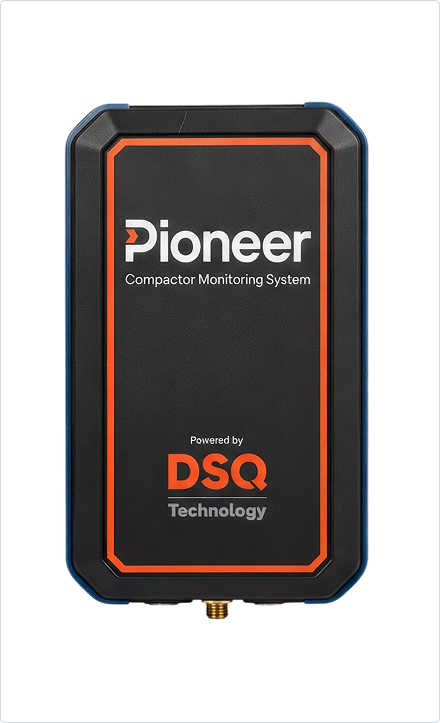
If your compactor runs on a fixed schedule, you’re probably paying for hauls you don’t need. DSQ Pioneer predicts when the compactor will hit its fullness target and self-schedules the haul. It measures fullness in real time, and it can book hauls through your hauler or your waste broker.
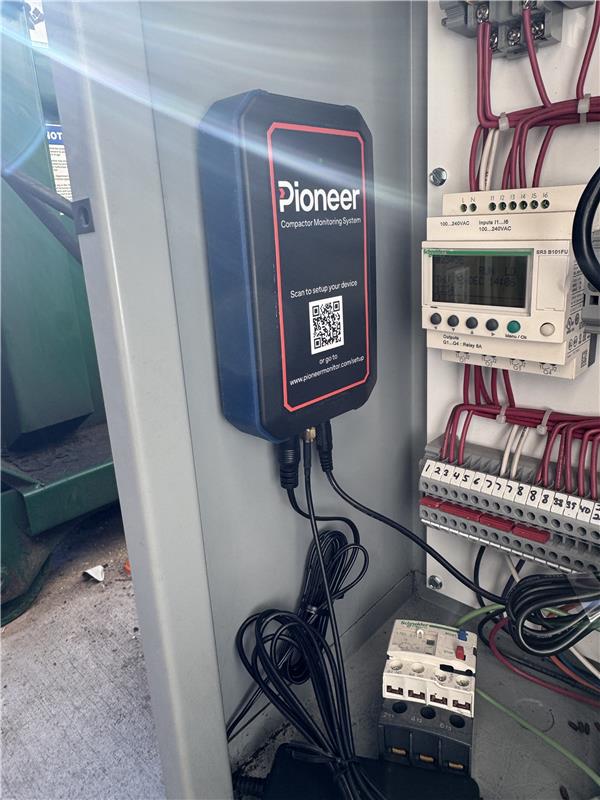
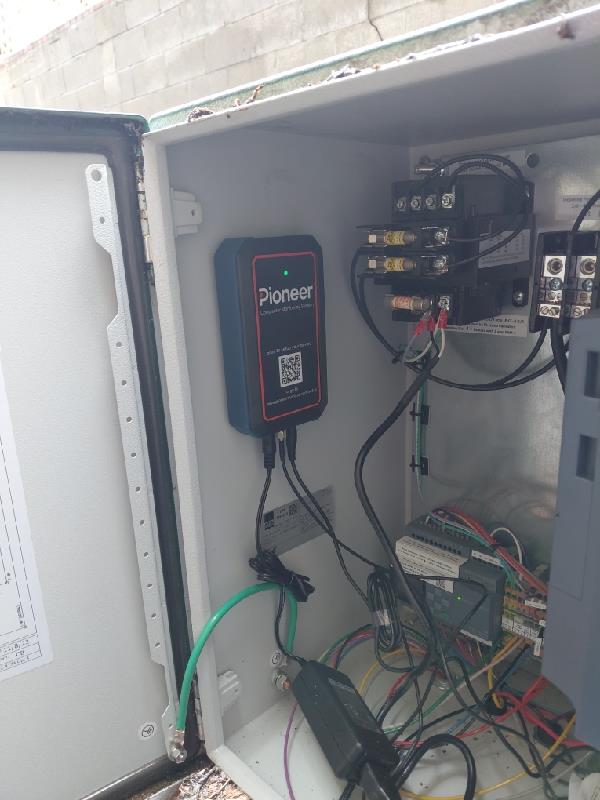
DSQ Pioneer reads the electrical current (amperage) that your compactor’s ram motor draws. That reading shows how hard the compactor works to compress material. The fuller the compactor, the harder the ram works.
DSQ Pioneer turns that effort into a fullness percentage. It forecasts when the compactor will reach its target fullness (typically about 70%). DSQ Pioneer then automatically requests service from your hauler or broker before the compactor reaches that target. Hauls happen when the compactor is nearly full, so a fixed calendar no longer decides your schedule.
Every compactor has its own signature. DSQ Pioneer learns yours by watching how much power the ram motor draws across compaction cycles. Right after a haul, the compactor is empty and the ram meets little resistance. That reading becomes the empty baseline.
As material builds up, each cycle draws more power. DSQ Pioneer compares readings from just after a haul (empty) with readings at or near the haul date (full). This sets what 0% and 100% look like for your machine, and DSQ Pioneer reads every level in between.
“Machine learning” just means DSQ Pioneer learns from experience and adjusts as it goes. Each compactor monitor starts with a training period. It watches your compactor’s habits: how often it cycles, how hard it works each time, and how usage changes from day to day.
Within the first 2 to 3 hauling cycles, DSQ Pioneer learns what “full” looks like at your property, based on your own compactor’s data. It keeps getting sharper with every haul after that.
During training, hauls stay on your existing schedule. That schedule stretches out bit by bit as DSQ Pioneer gains confidence. Once DSQ Pioneer knows your compactor, scheduling switches to actual fullness.
DSQ Pioneer calculates your compactor’s average fill rate from past run data and current activity. Then it projects fullness forward, every few hours, until it reaches the target. DSQ Pioneer keeps recalculating from real cycle activity, so you get a live forecast that updates as your compactor works.
Actual compaction activity drives the forecast, so DSQ Pioneer handles spikes on its own. If occupancy jumps or a busy season hits, the compactor cycles more often. Fullness climbs faster, the forecasted full date moves earlier, and DSQ Pioneer requests service sooner.
When volume drops, the forecast stretches out. You skip hauls you would have paid for on a fixed schedule.
DSQ Pioneer typically projects haul weight to within about half a ton. Yes, accuracy also improves over time. Every haul teaches DSQ Pioneer more about your compactor, so predictions get sharper the longer it is installed.
Packouts happen when a compactor fills faster than its schedule expects. DSQ Pioneer takes out the guesswork. It watches fullness all the time and requests service with lead time, before the compactor maxes out. That means no overflowing enclosure, no emergency haul fees, and no panicked call to the hauler.
You and DSQ set your hauler’s service days and lead times during setup of DSQ Pioneer. DSQ Pioneer forecasts days ahead, so it requests service early enough. The haul lands on a valid service day, before the compactor hits its target.
DSQ Pioneer supports up to 50 notification recipients. We recommend keeping the list to your hauler contact and a designated site contact.
There are two alert types:
1. Scheduling alerts go out when DSQ Pioneer requests service.
2. Confirmation alerts go out when the hauler confirms.
You can customize the email templates, and SMS alerts are available too.
Even efficient sites can drift. Seasonality, staff turnover, and schedule changes can wear down your tonnage before anyone notices.
DSQ Pioneer keeps your efficiency on track. It verifies that every haul actually happened and documents the tonnage per haul. It catches drift the moment it starts and gives you the reporting to prove performance.
Paired with DSQ Discovery, hauls verified by DSQ Pioneer are audited against hauler invoices. The weight data also flows into your sustainability reports as documented proof of fewer truck trips and lower emissions.