Compactor Sales & Custom Solutions: Building a Family Business in Waste Equipment
March 20, 2026
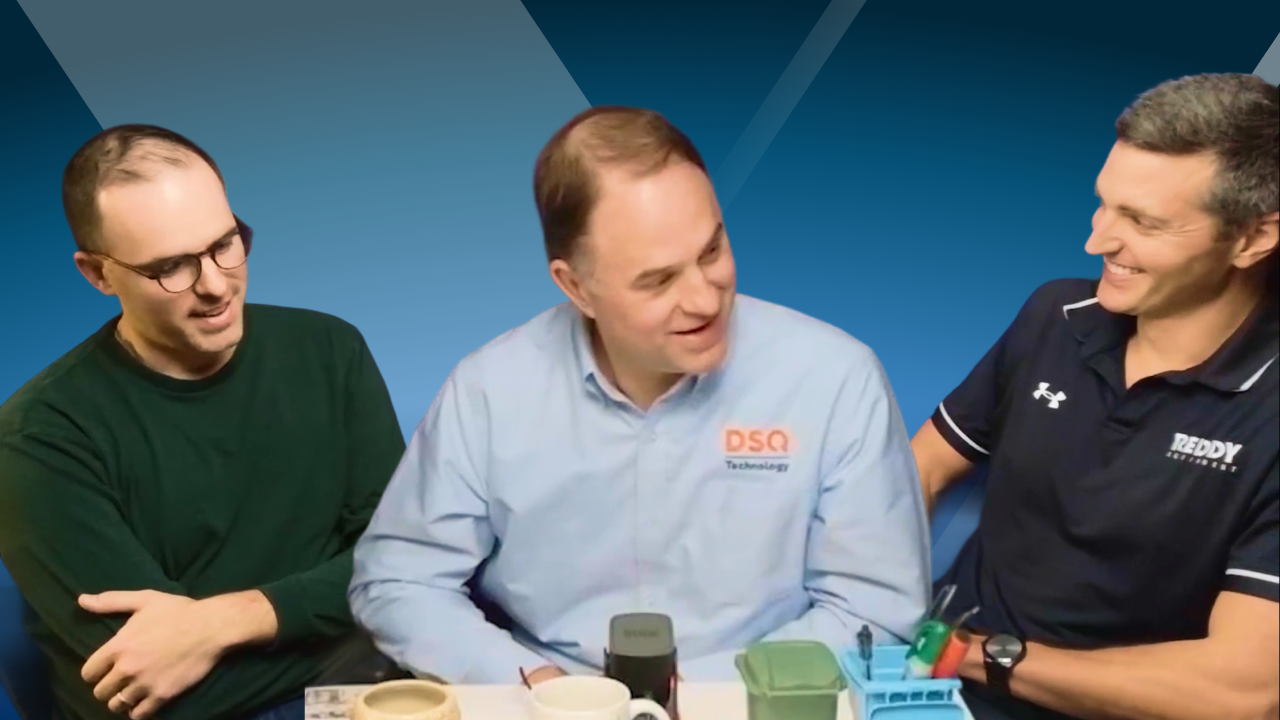
In this episode of Waste Nexus, we sit down with Eric Wengryniuk of Reddy Equipment, an Ohio-based company selling, renting, and servicing trash compactors and balers across the Midwest and beyond. Eric shares how Reddy got its start with a part-time fireman selling compactors on the side, how his family took the reins in 1996, and how he and his brother bought the business from their parents just last year.
We dig into what it actually takes to sell compactors the right way — starting with the customer's pain points, not the price tag — and swap stories about everything from Secret Service-level scrutiny at a political convention to auger fires sparked by discarded vape batteries. Eric also shares his take on how technology is raising the intelligence of the waste industry, why behavior change is still the hardest part of any equipment install, and why people who get into this business tend to stay for life.
Plus: a rapid fire round featuring Augusta National, a five-hour drive over TSA lines, and a house full of unassembled IKEA furniture.
SPEAKER_00 0:00Compactors are become more and more prevalent throughout the waste industry because there's a lot of value in them for customers, end users, manufacturers, grocery stores, multi-family, multi-family, any any locations that have uh generate enough trash, there's an ROI on having it compacted versus just having you know a waste hauler just pick up loose, loose trash.SPEAKER_02 0:24
So when you're doing that analysis, you start with the volume that they're producing.
SPEAKER_00 0:28
So yeah, we we start right. So we start with volume, we start with how they plan to use it, and we really just ask a lot of questions about what problems are they having with removing waste from their facility and how can we then use equipment and engineer solutions for them?
SPEAKER_02 0:48
Selling to the pain points they have versus selling to a price point. Exactly. It's a much better place to be.
SPEAKER_00 1:11
Eric Wengryniuk.
SPEAKER_02 1:13
Wengrinnick. Because I butchered that earlier when we were talking about it. Even there, you weren't confident. I'm still at the answer to the test. I I'm not known to be the best at pronunciation sometimes.
SPEAKER_01 1:25
You're not always known as a hesitator, though. You know, a little hesitation there. There is a little bit of I'm learning as I get older.
SPEAKER_00 1:31
That was yeah, like in school, it would always be there would be a teacher that, and I as soon as they got down to the W's, there'd be like a Derek W. D boss.
SPEAKER_02 1:45
Eric, why don't you just say it yourself? Go ahead. Uh well so Eric, how did you get into uh not just this podcast, but how'd you get into waste as a space? Uh, because you didn't start there, right?
SPEAKER_00 1:56
I didn't. Um so uh my company is ready equipment, and it was started by a guy named Jim Reddy, who was a part-time fireman and sold trash compactors on the side, and um so that's where the ready name comes from. And so he did that for a number of years, and then my dad worked for Allied uh waste as a sales manager, and he lived in PA, a couple different places with with Allied, and then came back to Cleveland, um, got exposed to the trash compactor side of the waste industry, and um bought the business from Jim Raddy in 1996. So my dad and my mom uh you know carried that small business, got exposed to a service business, bought uh a service business because they needed to be able to deliver and do the installs for the of the equipment for for his customers. Um, and so he carried that through. Um and my brother and I, who are both in the business, bought the business from my parents beginning of last year. And um my brother and I both joined. I joined in 2013. My brother joined shortly after, my younger brother.
SPEAKER_02 3:28
Yes. Um you didn't want to change the name from ready to your last name?
SPEAKER_00 3:32
Wasn't it no, you know, I don't know why, but it didn't have the branding that uh, you know, ready to solve your problem.
SPEAKER_01 3:42
It is a great name for that.
SPEAKER_00 3:43
Um so uh so yeah, I my we both my brother and I worked in uh corporate America, different, different uh doing different things, got relocated back to Cleveland and went more the uh small family business entrepreneurial route. And um we've been growing ever since. Doing uh we do service, we do rentals, and we sell equipment um in Ohio and in our Midwest region and nationally.
SPEAKER_02 4:17
Yeah. And when people are looking at compactors, what do you think? You know, what's the standard sort of process someone goes through when they're thinking, okay, maybe I should get a compactor? How do you walk them through that?
SPEAKER_00 4:30
So compactors are um have become more and more prevalent throughout the waste industry because there's a lot of value in them for customers. They could uh end users, um, manufacturers, um, grocery stores, multi-family, multi-family, any any locations that have uh generate enough trash. Um, there's an ROI on having it compacted versus just having um you know a waste hauler just pick up loose, loose trash. So um it's become much more prevalent. It it's uh another variable that of cleanliness um for for an operation, it gives that operation more capacity for growth, just a way to manage trash um better with a compactor if you generate enough of it versus just having it.
SPEAKER_02 5:24
So when you're doing that analysis, you start with the volume that they're producing.
SPEAKER_00 5:28
So yeah, we we start right. So we start with volume, we start with how they plan to use it, and we really just ask a lot of questions about what problems are they having with removing waste from their facility, and how can we then use equipment and engineer solutions for them? So there's a lot of questions, there's a lot of details that go into providing trash compactors or bailers, things like that. Um so our approach is really to just talk to the customer, get to learn where their business is going, what what pain points they have, and really look at you know, taking it as a full process improvement.
SPEAKER_02 6:10
Um selling to the pain points they have versus selling to a price point. Exactly. It's a much better place to be. Exactly. Um well, so then when you look at the history, I mean you guys were talking before we started about some of the funny stories from the past.
SPEAKER_01 6:26
Charlie, you had one about uh a compactor at a hotel that yeah, we at one point I think we're helping manage something in the convention center in Ohio, and the one of the Democratic or Republican conventions had to be there, and that's looked at as like more of a risk, right? The trash compactor than it is an asset in that type of scenario. And so I think they had us, and we asked for your help on okay, we've got to get this compactor out. They need to do an analysis of the loading dock and make sure there's nothing uh inappropriate there. And then when it comes back in, and probably run into this in other situations, like they wanted to like open up the back door to the compactor, see what's inside of it, make sure they can see inside and behind the RAM and stuff like that to make sure there's no you know bad material.
SPEAKER_02 7:07
Didn't they want to do it every time it came on and on?
SPEAKER_01 7:09
They did, yeah. And then they wanted it emptied like every day too, up to and after this. And I, you know, I just Well, the only way to check it would be empty because you wouldn't want to try to open that door when it's got trash in it. Right, right. Yeah, you might be on the un uh unsavory side of that. But um, you know, it's just it's it's amazing to see the other types of things that no one worries about garbage until it's in that case a safety uh you know for security type thing, or it's backed up almost as though it's then treated with the same priority as a sewer pipe, but uh until then it's kind of out of sight, out of mind.
SPEAKER_00 7:40
Yeah, yeah. I mean, there's I said probably my service guys could give could give great stories about actually working on this equipment, seeing rats and uh different things that people throw down in a trash chute. And um, but yeah, I've seen speaking of that, thinking of um seeing uh you know, we were at a big food manufacturer and the and the trash hauler didn't close the door. Speaking of that, when the door didn't close the back door when they when after they emptied it, brought it back and you know two weeks, you know, a week later or five days later, whatever, however that gets hauled, yeah, that started to creep open and open, and then you had 30 yards of compacted trash.
SPEAKER_01 8:29
I've seen some creative solutions with that though. Like I've seen the property manager take a door, open it when it is empty, put in their bulky items in the way back of the compactor, which you know, then they're not gonna get crushed, but whatever. Uh to get a bulk service basically as part of the compactor. And then as it fills up with the rest of the material, when it's full, they finally take it away. But they kind of got rid of a mattress or a desk or whatever they had to, which I thought was kind of smart.
SPEAKER_02 8:52
Yeah, and they're not supposed to do that with a mattress, right? I don't think so, but you know.
SPEAKER_00 8:57
Oh, the amount of things that shouldn't go in um is a very long list that's well it's actually it is a longer list than you would think, um, just of of some of the products that can, you know, destroy it. Like even, and that's where you know what we what we get into of why that's so important in our process of making sure the customer actually gets the right thing, because if you know you want to throw wood pallets away or you want to throw bulk items or different things like that, that's why we kind of offer a different a lot of different solutions that then come back to to management of it with the tonnage. So if you get into an auger style compactor versus uh you know a basic hydraulics uh stationary, you might be getting more tonnage, there's more equipment, you know, there's more price point, a higher price point for an auger, but you're gonna get more densified tonnages with the right equipment. So that's why, you know, when we go through our process, that's that's really important for the longevity of the equipment and for the right um, you know, making sure we provide the right solution that gives that customer the the ROI of why they chose a compactor in the first place.
SPEAKER_02 10:11
Have you seen um there are a lot of stuff online about fires at Murphs and on uh residential packers that are picking up people's house trash? Have you seen that happen because of vapes and those things with vapes, batteries, yeah, things with batteries.
SPEAKER_00 10:27
You've seen that with the compactors? We've we've we've put them in um like we've had augers in at uh you know big um customers, just customers, yeah. Yeah, big, big bulk compacted trash and that takes you know random tons of random stuff, puts it in this auger, and yeah, there's there's been fires in the in the machine because it does such a good job of compacting that it also breaks the battery. Breaks the battery and pops a fire in the back.
SPEAKER_02 11:00
And when that happens, do they end up uh pulling the box and having it repaired and then brought back?
SPEAKER_00 11:05
Is that usually how they do it? Yeah, I mean, most of the time, you know, we especially with an auger, there's not as much hydraulic um components, so like you you don't have to worry as much about like hoses getting burnt up and things like that. Um but yeah, I mean you could significantly damage damage the machine, obviously damage your your whole building.
SPEAKER_02 11:28
It could get into the as a practice, they're generally gonna pull that whole machine off and send it to you to get looked at the case.
SPEAKER_00 11:33
I think by general practice, they yeah, first is like try to get it all the you know all the way out, get the fire out, and then we'll get the call and say, Hey, can you come inspect this and make sure there's no problems? Right, right.
SPEAKER_02 11:47
So you but you do that on site first if you can.
SPEAKER_00 11:49
Yeah, yeah.
SPEAKER_02 11:50
Unless it's just a moment.
SPEAKER_00 11:51
Especially if it's a stationary, obviously it's gonna stay on site. So yeah, we'll get technicians out. Um but yeah, there's there's lots of crazy. They're just very dangerous machines at the end of the day that you gotta make sure you're careful how you use them and and what you're throwing away. And so yeah.
SPEAKER_02 12:11
Well, that's uh one of the things that we looked at in the past with you was how sensors are changing some of that work. Um from what you're seeing from where you sit. Uh obviously you're familiar with what we've done, but what do you see in terms of the technology aspect of this? What's changing or what's new since you started? I mean, you're almost 15 years into this.
SPEAKER_00 12:30
Yeah, I mean, I think and and you guys obviously know as well, just the amount of technology improvements has dramatically uh changed the waste industry uh on a whole, and and obviously with with AI there's gonna be uh even more dramatic changes. Um so yeah, it's been crazy from from truck uh truck uh you know asset management and GPS trackers and and what you guys have done with the monitors and um analysis of of your waste stream, um just the amount of information uh that's that's come into the space in general has has you know changed it, and there's just much more intelligent um there's the intelligence of the space is is dramatically increased as well.
SPEAKER_02 13:25
Well do you find that it ends up putting you in a position though where you have it's helping you uh create more human-to-human interaction? Yeah. You don't have to do as much you know, background baloney.
SPEAKER_00 13:37
Yeah, I mean I I would say we're you know we're constantly looking at what technologies can do to improve process and workflows to to make that human-to-human interaction more meaningful rather than just spending a bunch of time doing doing tasks or doing things that that you know no one really wants to do, right?
SPEAKER_01 14:03
So there's I I feel like that's huge because you mentioned earlier like the the the technology improvement in my mind comes uh visually with the control panel. It doesn't have physical relays anymore, it's a lot simpler. There's you know PLCs and all that kind of stuff, and that's been something that we see through photographs and stuff and installations that have been big. But it never really gets to the the question that you couldn't put on the spreadsheet, the part that you didn't necessarily have in the process that was not necessarily able to be foreseen in advance, like what caster setup do they need? What exactly is this equipment gonna look like when it gets in a trash room? And that's where you really want to drive those that time for the human-to-human interaction, because you're often gonna have something go wrong that you didn't expect and have to figure out. Exactly.
SPEAKER_00 14:45
At the end of the day, you know, we are providing a solution. And when we're providing a very custom-oriented solution, we're gonna use technology tools to help us work quicker. Right. Um, but right now, in the way that our uh, you know, our expertise comes from that human interaction, that that uh trust building that you need in in any sales process, but especially one that gets into custom engineered uh solutions that um that change your you know the way your customers work or or your people work um you know in your in your plant at your property. Um, you know, there's still a lot of value in behavior change is the hardest, man.
SPEAKER_01 15:36
We see somebody put the bag next to a compactor in a multifamily building, and then all of a sudden everybody thinks it's broken. It's like no, you just gotta put it in and let it run. Correct.
SPEAKER_02 15:44
So yeah, that's the last guy there can mess it up for everyone.
SPEAKER_01 15:47
Yeah.
SPEAKER_02 15:48
So where do you see ready going over the next maybe two decades? No wanna don't want to retire you too soon.
SPEAKER_00 15:56
But yeah, these the the gray hairs are giving me away though. That's that's the reason I don't grow a beard. I think you're getting some more since the last time I saw you too. I would give Santa a good run for his money if I grew a beard.
SPEAKER_02 16:07
Let's just say that.
SPEAKER_00 16:08
Yeah. Um, you know, uh, I think we talked about beforehand, but I mean, I think what what I think both of our companies are trying to do, we're trying to get um, you know, bring in great talent um into the into the waste industry and just continue to to grow our our our customer base, our uh geographical reach. Um you know, we we we kind of touch all parts of trash compactors and balers, and um, you know, we're just continuing to look to to to grow um here in the Midwest and then and nationally with with adding great people. So um it's a great industry. Um people that get into it don't don't leave easily. You get a lot of a lot of people that that once they're in, they'll they'll be lifers because it's got everything you want. You can scratch your entrepreneurial spirit, you can compete, there's opportunities for growth, you work with great people.
SPEAKER_02 17:13
Interesting places usually.
SPEAKER_00 17:15
You get a it's it never stops, um, which can be exhausting at times because it it doesn't stop. It's super urgent.
SPEAKER_02 17:23
But beauty beauty of software is usually no one bugs us after a certain hour, and no one there's not much you can do on a weekend typically.
SPEAKER_00 17:32
Well, for us, we offer 24-hour service. So and trash compactors break at any point, you know, at at hospitals or you know, at wherever, there's places that trash is always trash is always a million-dollar problem if it breaks at the end of some sort of production process, right? Yeah, they're yeah, yeah. I mean, if your hospital trash compactor breaks at midnight, you still need you still need it running by 1 a.m. So, you know, it's it's uh I mean that's the you know the blessing, the blessing of it is that's the opportunity is solving those problems that that exist in this very urgent, uh, important space. Right.
SPEAKER_02 18:17
So well, speaking of problems we need to solve, we need to put you through the rapid fire questions that um love it. I hinted at these earlier, but don't don't go too long on answers. You've got to try to be brief. Right. It's hard for me, but yes. Uh okay, so your college football team.
SPEAKER_00 18:37
The Ohio State University. Good job getting the V in there. Yes. Otherwise you'd be cast out, right? Yeah. Oh yeah, you gotta see. You have to move out of Ohio State. I think now the the guy says the the world famous is what um Gus Johnson on the on the big noon kickoff says.
SPEAKER_02 18:52
Um did you hear about Notre Dame's situation with the playoffs and the bowl games and the whole thing?
SPEAKER_00 18:57
I I heard that that they were debating not playing in the bowl game, but I didn't know it was.
SPEAKER_02 19:02
Okay, so if you're Notre Dame, would you have made the same choice of not playing in a bowl game if because they didn't get into the playoffs?
SPEAKER_00 19:09
No. Because I I mean I think Marcus Freeman, Ohio State former player, I think he's he's a competitor. I'm surprised he didn't want to compete.
SPEAKER_02 19:18
Um US Open or Masters? Masters. Masters, okay. Uh which hole at the Masters?
SPEAKER_00 19:26
Number one. Number one, just teeing it off. You get to see all the legends, you know, the legends tee off.
SPEAKER_02 19:33
Um okay, one hour flight or a five-hour drive?
SPEAKER_00 19:37
Uh five-hour drive.
SPEAKER_02 19:38
Five hour drive. You don't like going through TSA, taking your shoes off? You don't like all the things that we're gonna do.
SPEAKER_00 19:44
Yeah, I think I said I think you know, I think the uh I would have probably said one hour flight ten years ago, but nowadays, yeah. I think when your flights get canceled enough that you yeah, you one hour flight isn't a five year old.
SPEAKER_02 19:59
Correct. Uh all right. If you could run a public or private waste company, which would it be? Uh private. Private? Any particular one? Mine. Yours. That's a fair answer. Um not changing the name still, still convinced you're still we're still ready to go. Uh what's one thing in life you'd want to automate? Uh, an example someone gave before was they wanted their phone to call their grandmother for them every Sunday automatically. So they just had to pick it up and start talking.
SPEAKER_00 20:31
I would say any household chores, but in particular uh the shelving or bed frames or these different things that my wife asked me to put together for our kids for their bedrooms. Um if you can automate that, then that would that would Christmas decorations just did Christmas decorations? Christmas gift assembly is coming out. Christmas wrapping.
SPEAKER_02 20:59
I mean, any anything like that I think I'd are you at Christmas after Thanksgiving people or are you Christmas after Halloween people?
SPEAKER_00 21:06
We we start Christmas. My wife is a Christmas fanatic. And then we have a seven-year-old, a five-year-old, and a three-year-old. So Christmas starts early. Hi, kids. Yeah, love you.
SPEAKER_02 21:17
Yeah. All right. Well, kids, thanks for watching. Hopefully, other people do too. Eric, appreciate it. Yeah, great guys.
SPEAKER_00 21:24
Thanks for having me on. Yeah.